Greek tradition:
The original (native) Epanokalimmavko(n) [επανωκαλύμμαυκο(ν)] was with a removable veil covering the Kalimmavchi(on) [καλυμμαύχι(ον)]. The veil is placed on the underlying Kalimmavchi(on)[καλυμμαύχι(ον)] with a conical top or removed, depending on the occasion. The veil is always worn for liturgical prayer. In non Greek traditions the veil is fixed on the hat beneath and not removable.
For Epanokalimmavko(n) - επανωκαλύμμαυκο(ν) you find it as well named/written as:
[Epanokalimavko(n), Epanokalymmavko(n), Epanokalymavko(n), Epanokalimmafko(n), Epanokalimafko(n), Epanokalymmafko(n), Epanokalymafko(n)
Epanokamelavko(n) - επανωκαμήλαυκο(ν), Epanokamilavko(n), Epanokamilafko(n), Epanokamelafki (volksspr.), Epanokamelavki (volksspr.)
Epirrhiptari(on) - επιρριπτάρι(ον)]
For Kalimmavchi(on) [καλυμμαύχι(ον)] you find it as well named/written as:
Kalymmavchi(on), Kalymmauchi(on), Kalimafhi(on), Kalymmavchi, Kalimafi
Kalimmauki(on) - καλυμμαύκι(ον), Kalymmavkhi(on), Kalymmauki(on), Kalymauki
Kamelauki(on) - καμηλαύκι(ον), Kamilauki(on), Kamelavki(on), Kamilavki(on),
Kamelafki(on), Kamilafki(on), Kamilafki, Kamilavki]
Russian tradition:
The klobuk has a conical kamilavka (Камилавка) as base with a veil fixed attached to the kamilavka.
In general you can distinguish between:
- color (white or black):
Black color is mainly worn by orthodox archbishops and bishops, if they originate out of the monasticism.
White color is mainly worn by the metropolitans of the orthodox church.
- decoration (cross or without cross) on the forefront
Only dignitaries of the Russian tradition decorate their klobuk by a cross made out of precious stones. The cross normally has only one crossbar with exception of the cross of the Metropolitan of Minsk and Slutsk.
Dignitaries coming from the Greek tradition do not decorate their Epanokalimmavko(n) with a cross. Exeptions may occur.
If you want to know it more in detail, please have a look at the
The bases:
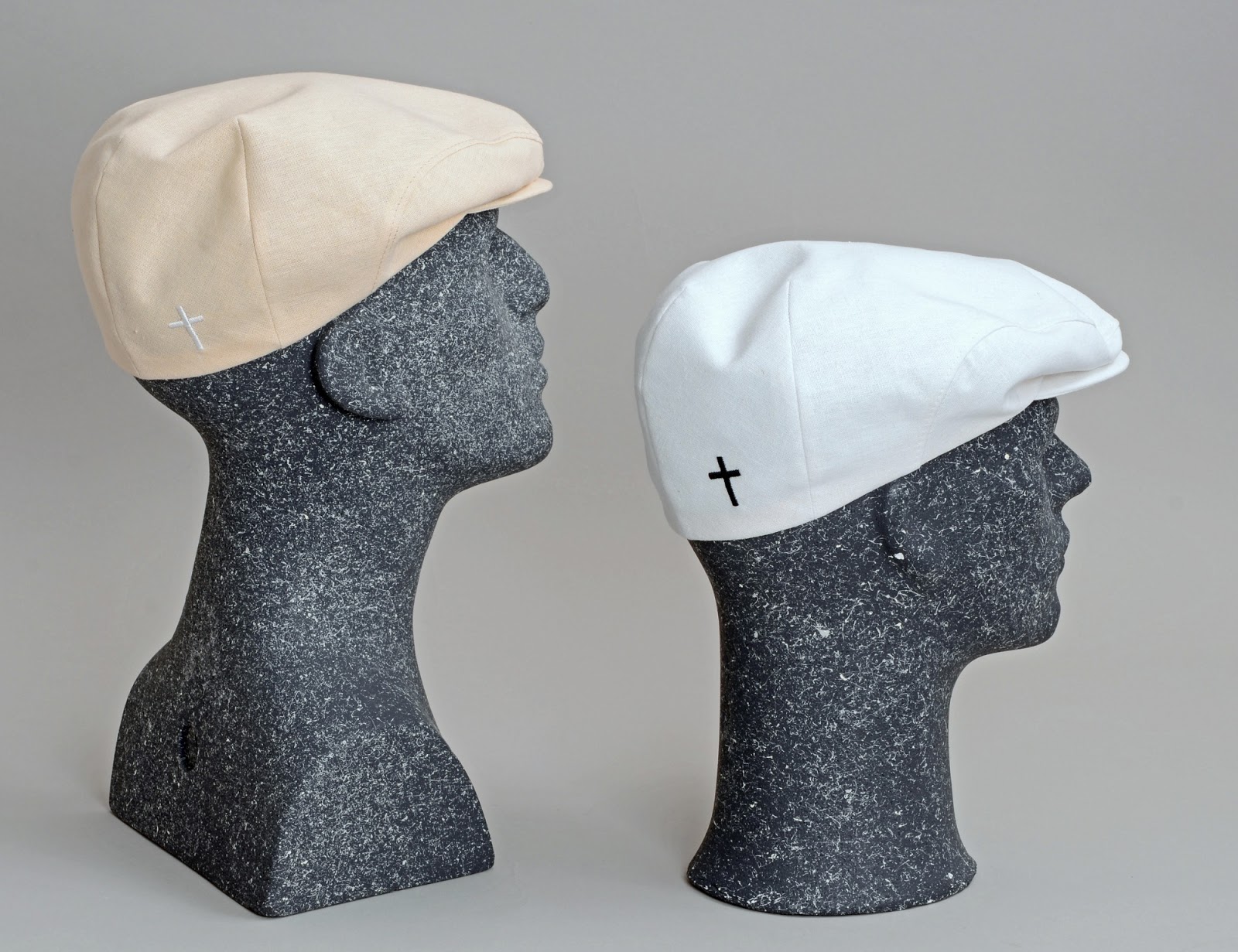
Left: Greek Kalimmavchi(on) [καλυμμαύχι(ον)]
Richt: Russian Kamilavka (Камилавка)
Some examples:
His Holiness
Irinej,
Archbishop of Pec, Metropolitan of Belgrade and Karlovci and Patriarch of the Serbian Orthodox Church
White klobuk (veil is permanent attached) with golden cross
His Holiness
Daniel,
Archbishop of Bucharest, Metropolitan of Muntenia and Dobrudgea, Locum tenens of the throne of Caesarea of Cappadocia, Patriarch of Romania
White Epanokalimmavko(n) [επανωκαλύμμαυκο(ν)] with cross
His Beatitude Patriarch
Neophyte,
Head of the Bulgarian Orthodox Church
His Beatitude
Metropolitan Krystof,
Primate of the Orthodox Church in the Czech Lands and Slovakia
White klobuk (veil is permanent attached) with golden cross
His Beatitude Metropolitan
Daniel (Nushiro),
Head of the Japanese Orthodox Church
White klobuk (veil is permanent attached) with golden cross
His Beatitude
Sawa,
Archbishop of Warsaw and Metropolitan of All Poland,head of the autocephalous Church of Poland
White klobuk (veil is permanent attached) with golden cross
Jonah (Paffhausen), Archbishop of Washington, Metropolitan of All America and Canada and primate of the Orthodox Church in America (OCA) from 2008 to 2012
White klobuk (veil is permanent attached) with golden cross
Metropolitan of Minsk and Slutsk, Patriarchal Exarch of All Belarus and leader of the Belarusian Orthodox Church
White klobuk (veil is permanent attached)
Cross with a smaller crossbeam (sign INRI) used by the
Jagiellonian Dynasty in Poland. This cross now features on the coat of arms of Lithuania and in former times also the coat of arms of Belarus. It reminds of the Belarussian
Saint Euphrosyne of Polatsk, who wears a cross with 2 crossbeams on her hood, too.
Archbishop of Nova Justiniana and All Cyprus
Black Epanokalimmavko(n) [επανωκαλύμμαυκο(ν)]
Black klobuk
White klobuk